
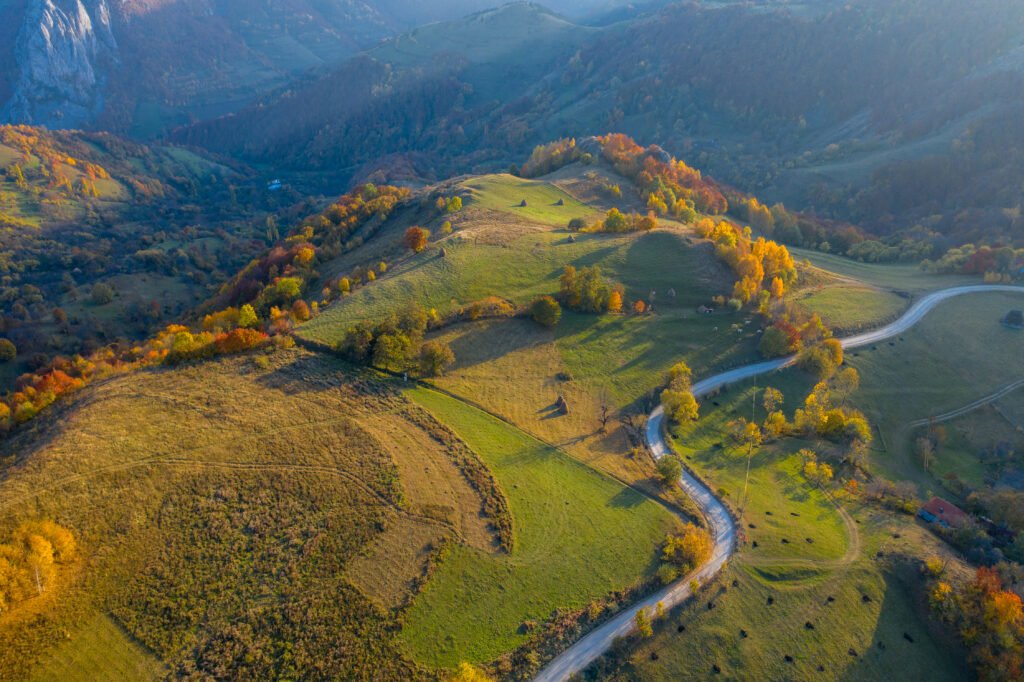
Serbia is a country with a deep connection to the land.
For generations, agriculture has been part of its identity. Fertile plains, strong farming traditions, and a climate capable of producing a wide range of crops have made Serbia one of the agricultural centers of the region.
Yet Serbia now stands at an important crossroads, with both a unique challenge and a unique opportunity.
Which pathway will Serbian agriculture take? Will it continue following the same industrial agricultural model that has shaped much of the world over the last century, or will it look toward a new generation of farming that works closer with nature?
Unlike many countries where agricultural systems have been built for decades around intensive chemical dependence, Serbia still has room to make a different choice. The country has maintained restrictions on genetically modified crops, and there remains a strong connection between farmers, land, and traditional agricultural knowledge.
But there is also a reality that cannot be ignored. Modern farming in Serbia is increasingly reliant on conventional fertilizers. Fertilizer consumption reached approximately 138 kilograms per hectare of arable land in 2023, including nitrogen, phosphate, and potassium-based fertilizers.
These fertilizers have played a role in increasing production, but around the world farmers are also facing growing concerns about soil health, declining organic matter, nutrient imbalance, and the long-term sustainability of farming systems. Healthy agriculture begins with healthy soil.
Serbia already has examples showing another direction is possible. Organic farming remains a small percentage of Serbian agriculture, but it has been growing. Recent estimates place organic production at around 0.8% of utilized agricultural land, with growth over the past decade. Serbia also has thousands of organic producers and a growing export market for organic products.
The future opportunity may belong to farmers who understand that productivity and nature do not have to be opposites.
For decades, much of the agricultural world has focused on maximizing output through chemical inputs, synthetic fertilizers, and systems designed around immediate yield increases. Those systems helped feed a growing population, but they also created new challenges — soil degradation, reduced biodiversity, chemical runoff, and dependence on external inputs.
Now many farmers are looking again at what nature already understood: Humic substances. Organic matter. Trace minerals. Microbial life. Stronger soils.
The foundation of farming has always been beneath our feet. Serbia has something valuable: the ability to build the next generation of agriculture without first having to completely rebuild a system that has become deeply dependent on one model.
The country has approximately 4 million hectares of agricultural land, with more than 500,000 agricultural holdings, the vast majority being family farms. This creates both a challenge and an opportunity. Supporting farmers with better tools, better soil solutions, and sustainable technologies could reshape the future of Serbian agriculture.
This is where REMINUTA enters the picture.
REMINUTA represents a shift in thinking — not away from productivity, but toward balance. A focus on soil-first agriculture, where natural mineral systems, humic structures, and organic soil health are treated as the foundation of yield, not an afterthought.
In a country like Serbia, where agriculture is still evolving and not yet locked into the traditional Western irreversible systems, solutions like REMINUTA have a unique role: to support farmers at the point where change is still possible, practical, and scalable. This approach allows farmers to use REMINUTA as a standalone solution where needed, or integrate it with existing practices as part of a gradual transition, depending on their soil conditions, production goals, and long-term strategy.
The question facing Serbia is what kind of agricultural future does it want to create? With modern science, Serbia can now choose farming solutions which are win/win. Not only can they focus on maximum production but they can now also work towards a future where productivity, soil health and nature work together.
Serbia still has the opportunity to choose modern organic solutions. The land is already here. The farmers are already here.
Now the next chapter depends on the solutions chosen today.
