
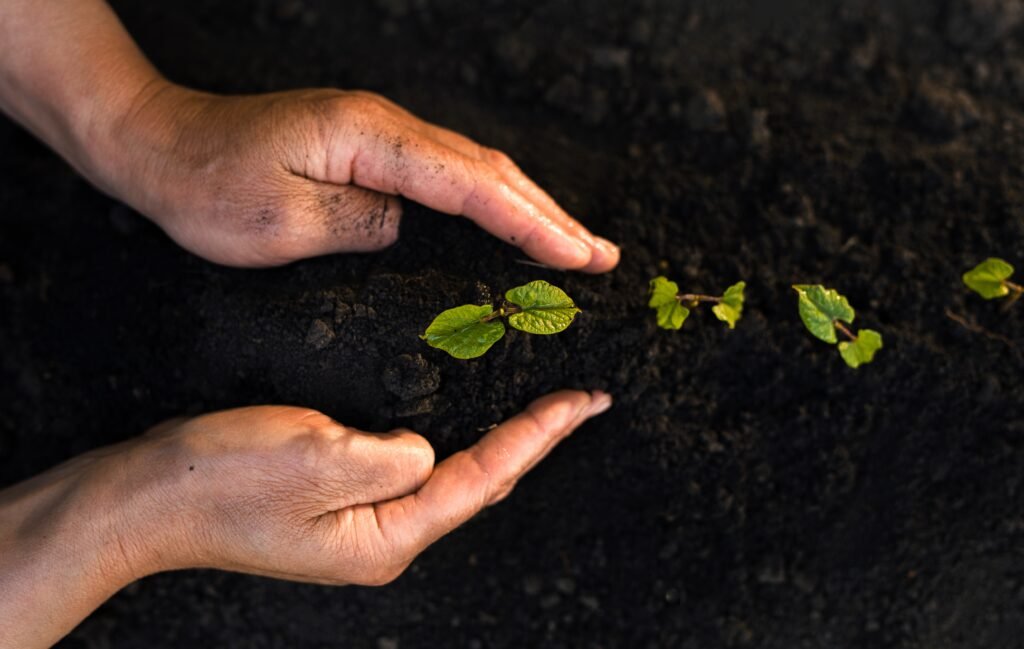
For decades, farmers have been told that producing more food requires applying more fertilizer. That approach helped feed a growing global population, but it has also left many producers facing rising input costs, declining soil health, and diminishing returns. Today, advances in soil science are offering a different path. Rather than relying solely on increasing chemical applications, regenerative agriculture focuses on restoring the soil itself. Products like REMINUTA™ Terraare part of this shift, helping farmers improve soil health, increase nutrient efficiency, and build more productive farms for the future.
The Success—and the Cost—of Modern Agriculture
Modern agriculture owes much of its success to synthetic fertilizers. During the Green Revolution, nitrogen, phosphorus, and potassium (NPK) dramatically increased crop yields and helped reduce global hunger. However, decades of intensive farming have also revealed the limits of relying primarily on these nutrients. In many farming regions, soils have lost organic matter, essential trace minerals have become depleted, and fertilizer costs have continued to climb. As a result, many farmers find themselves applying greater amounts of fertilizer simply to maintain the same yields. The challenge today is no longer just feeding crops—it is rebuilding the soil that feeds them.
Healthy Soil Produces Stronger Crops
Healthy soil is far more than dirt holding a plant upright. It is a living ecosystem filled with microorganisms that recycle nutrients, improve soil structure, retain water, and support healthy root development. When this biological system is damaged, crops become increasingly dependent on external inputs. Farmers around the world are therefore adopting regenerative practices that strengthen soil biology instead of relying exclusively on additional fertilizer. The healthier the soil becomes, the more efficiently it can supply nutrients to growing plants.
Why Trace Minerals Matter
Plants require far more than nitrogen, phosphorus, and potassium to reach their full potential. They also depend on dozens of trace minerals that support enzyme activity, photosynthesis, root growth, and overall plant health. Although these minerals are needed in much smaller quantities, they play essential roles throughout the plant’s life cycle. Continuous harvesting removes these nutrients from fields year after year, and many are not replaced through conventional fertilizer programs. Restoring this broader mineral balance helps create healthier soils capable of supporting stronger, more resilient crops.
A New Approach with REMINUTA™ Terra
REMINUTA™ Terra was developed around the principle that healthy soils produce healthier harvests. The soil remineralizer combines ancient volcanic trace minerals with advanced humic technology to improve the soil environment rather than simply supplying additional NPK nutrients. By replenishing a wider spectrum of minerals and supporting beneficial microbial activity, REMINUTA helps make nutrients already present in the soil more available to plants. Instead of replacing fertilizer programs outright, it is designed to work alongside them, improving nutrient efficiency while helping restore long-term soil health.
Better Farming for the Next Generation
Agriculture is entering a new era where success will depend not only on maximizing this season’s harvest but also on protecting the land for future generations. Farmers are under increasing pressure to produce more food while reducing costs and preserving natural resources. Technologies that improve soil health can help meet both goals by supporting resilient crops and making better use of existing inputs. As science continues to deepen our understanding of the soil beneath our feet, the future of farming is becoming less about adding more chemicals and more about restoring the natural systems that have sustained agriculture for thousands of years.
